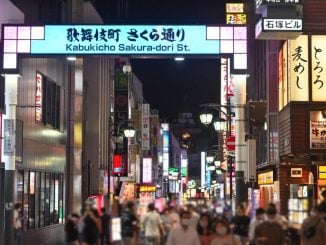

A few years ago, Okubo Park on the edge of Kabukicho was one of those spots everyone seemed to know about — even if they pretended they didn’t. Rows of young women standing around, phones in hand, waiting. Foreign tourists with cameras showed up looking for content. Japanese media and social media turned it into a full-blown moral panic. Host club debts, oshi spending, runaway girls, cheap sessions starting around 10,000 yen. The usual mix.
Now the scene looks different.
A recent Japanese report says the concentrated presence around the park has largely faded. A restaurant worker nearby put it simply: two or three years ago you could see as many as fifty women lined up. For about a year now, it’s been quiet. Mostly middle-aged guys wandering around looking disappointed. When a reporter checked the area in July, it was eerily still except for drunk people leaving bars. The streamers who’d come hoping to film “tachinbo content” were standing around confused with nothing to shoot.
Police numbers back up the shift. Arrests for soliciting around there: 140 in 2023, 97 in 2024, 112 in 2025. Mostly women in their twenties, some minors. The actual penalties under the Anti-Prostitution Act are light — up to six months or a 20,000 yen fine — so they’re more of a warning than a real deterrent. What’s changed is the pressure: joint patrols involving the neighborhood association, Metropolitan Police, Tokyo government, and hired security. Extra attention around the Shinjuku Toho Building area too. Host club debt practices have also been in the spotlight.
A Shinjuku ward official said the absolute numbers on the street have dropped compared with two or three years ago, but they’re not claiming victory. They expect some women might come back, so the patrols are staying.
They’re not gone. They’ve just stopped clustering in the obvious place.
The same restaurant worker noted they still operate from around sunset (when salarymen finish work) until just before the last trains. Weekends are busier. Instead of hanging at the park, many wait in front of love hotels. Other spots mentioned include in front of Okubo Hospital and the gaps between buildings. One woman who spoke to a reporter described the new routine: police are around day and night, so staying in one spot is risky. If told to move, she kills time at a convenience store. Walking around makes it harder to get labeled as a streetwalker. Then she cut the conversation short to meet a middle-aged guy.
Osaka has seen a similar push to clear young streetwalkers from visible spots.
This is happening while Japan’s government talks about amending the anti-prostitution law so customers can be punished too, not just the women and operators. Soaplands have also been under pressure. At the same time Kabukicho is trying to look more family-friendly amid the tourism boom. Officials don’t love the image of young women openly selling sex in a district that’s now on every visitor’s map — especially when social media has already told a lot of foreign men exactly where to look.
So no, the phenomenon hasn’t disappeared. It’s just less convenient to film, less concentrated in one park, and a bit more mobile. The park itself is quieter. The hotels and side streets less so. Same story, slightly different address.