Japan’s geisha districts are a black box to most people. When someone who actually lived inside one starts talking, it makes noise.
That happened in 2022, when former maiko Kiritaka Kiyoha went public about life in the karyūkai — the “flower-and-willow world.” She said that after debuting at 16, she was pushed to drink far past her limit, groped by customers, and steered toward a wealthy patron, or danna. The number attached to that arrangement, she said, was ¥50 million. None of it would have gone to her. It would have gone to the house.
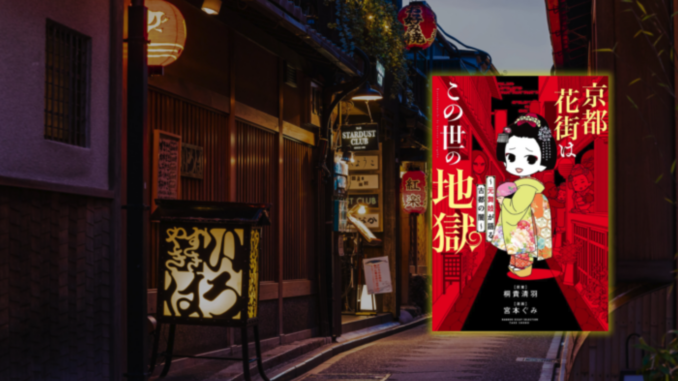
She’s back in the news because artist Miyamoto Gumi has been turning her account into a comic-essay series, Kyoto’s Geisha Quarter Is Hell on Earth. Volume 1 came out in 2025. Volume 2 dropped in January 2026. Bunshun has been running excerpts through August.
The books use a fictional stand-in, Takekoma. Volume 2 adds the part that sounds almost bureaucratic until you sit with it: after she left her okiya, the house billed her an exit fee.
In a normal job, charging someone to quit is illegal. Legal experts say geisha houses lean on technicalities — no standard employment contract, a traditional “adoption” ritual instead — and call the number training costs, kimono, room and board, a penalty for leaving early. On paper it can look like a debt. In practice it functions like a lock on the door.
What she says happened after she walked out
Kiritaka debuted in Pontochō in November 2015 as Ichikoma. She lasted about eight months and left in July 2016.
In later interviews she described being summoned back with her mother. Around ten people from the house were waiting. She says they demanded a penalty in the tens of millions of yen — she’s cited ¥30 million in one account and ¥50 million in another, the same ballpark as the patron deal she says they floated for her virginity.
Her mother said they couldn’t pay. According to Kiritaka, the response was not a payment plan. It was: get a danna, you’re still a virgin, go work in fuzoku, that’s how you’ll live.
She says there was no contract she could point to. Pocket money was about ¥50,000 a month. After she left, a resident-tax bill showed up as if she’d been on a formal salary she doesn’t remember receiving. She paid it.
She has called maiko “modern slaves”: no real say, no real privacy, no clean way out. She now works with volunteer lawyers in a network pushing for better labor conditions for girls in the districts.
These are her allegations. The Kyoto foundation that oversees the hanamachi has denied wrongdoing in the past. There is no public court ruling that settles the bill itself.
What the comics and the interviews keep circling is the same mechanism. A teenager enters an okiya with no contract. The house spends money on her training and wardrobe. If she leaves, that spending turns into a number she is told she owes. If she can’t pay, the suggested solution is a patron — which is how the virginity sale and the exit fee become the same conversation.
That’s the claim that made volume 2 land harder than the first book. Not just that the ozashiki could be ugly. That leaving came with an invoice.